Handoff · AI Voice Agent · Contact Center · Guide
No Caller Left Behind: How OpenBrain Guarantees a Way to a Human
Our AI voice agent follows strictly defined rules, so every caller has a way out: a transfer when they struggle, when the agent can't help, or whenever they ask for a person.
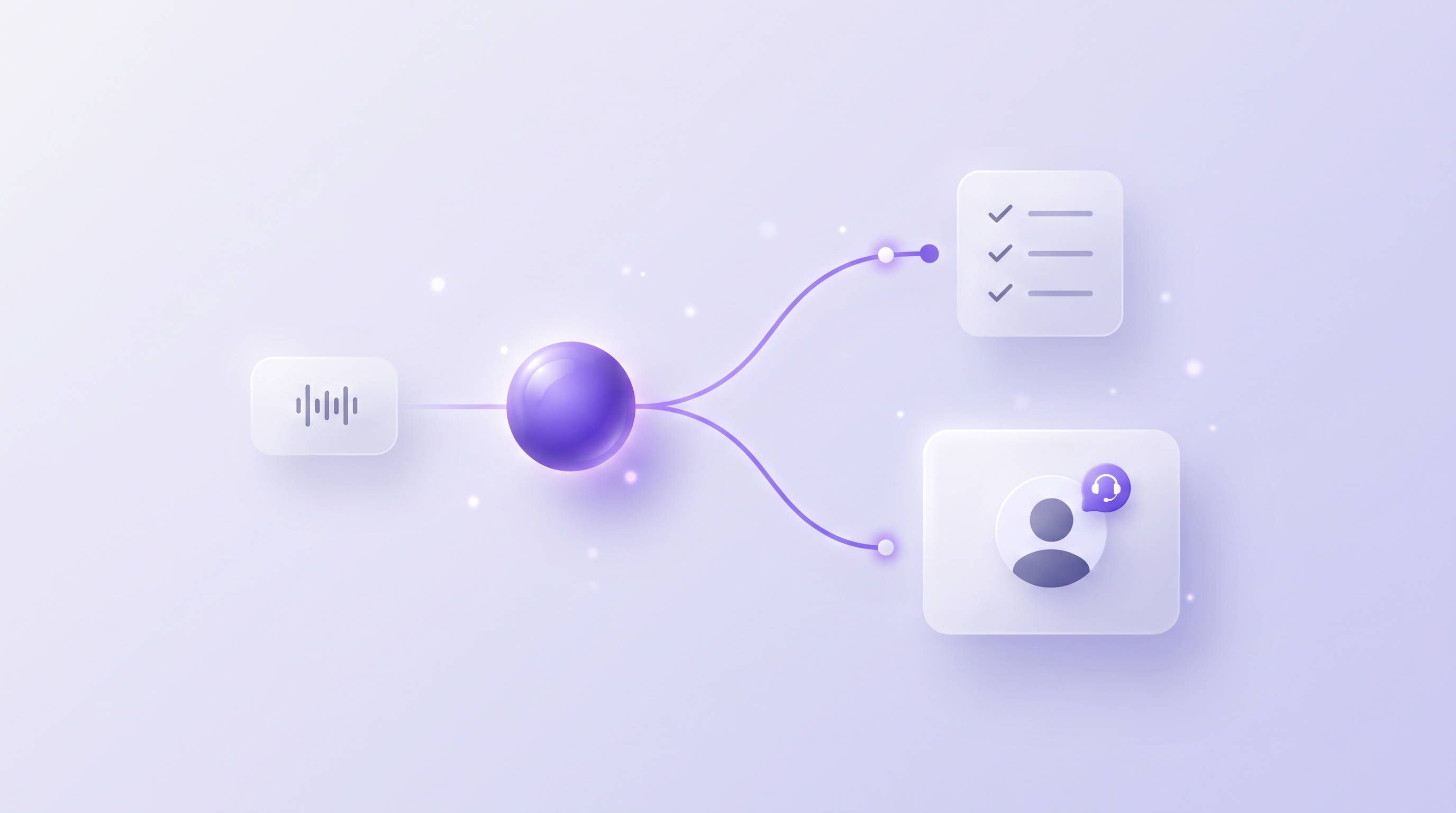
The biggest fear about AI on the phone is the dead end: a caller stuck with a bot that doesn’t understand them and won’t let them go. We build OpenBrain so that this can’t happen.
Here is how the agent works, and why every caller always has a way to reach a person.
At a glance
- Rules, not guesswork
- Three guaranteed ways to a person
- Every call gets the same care
- A handoff without starting over
- Fewer handoffs over time
1. Rules, not guesswork
The OpenBrain agent is built entirely on strictly defined rules for your business. It doesn’t improvise or invent answers. It does what you have defined, and nothing else.
This makes its behavior predictable. You know what the agent will say and do, and anything your rules don’t cover is passed to a person instead of being guessed at.
2. Three guaranteed ways to a person
A caller reaches a person in any of these situations:
| Situation | What happens |
|---|---|
| The caller can’t manage the conversation with the AI | They are offered a transfer to a person right away. |
| The agent can’t handle the request | The call is always passed on. |
| The caller asks for a real person | They get one, with no argument. |
Nobody has to fight the system or repeat the same sentence five times to be heard.
3. Every call gets the same care
Whether the question is simple or unusual, we care about every call equally. A caller with a routine request gets a fast answer. A caller with an unusual one gets a person. Neither is left to fail quietly.
4. A handoff without starting over
When a call is passed on, the person who picks up can see the whole conversation so far, so the caller doesn’t start from zero. In your call list the call appears with the status Redirected, so your team can see where and why it was passed on.
You can read more about this in our post on live supervision of AI voice agent calls.
5. Fewer handoffs over time
A handoff is not a failure. It shows you where your rules have a gap. Review your Redirected calls regularly:
- If the same question keeps reaching a person, add a rule so the agent can answer it.
- If the caller only needed one fact, the agent can give it.
- If the case really needs a person, it stays with a person.
Routine questions move to the agent, and your team keeps the calls where people matter most.
Why it matters
- Trust: callers know a person is always within reach.
- Predictability: the agent follows your rules and does not guess.
- Equal care: every call is handled, none are abandoned.
See it with your own calls
Want to see how handoff works on your scenarios? Book a demo at openbrain.io and we’ll walk you through it live.